 Back to all articles



How to Overcome the Fear of Flying
If you’re an anxious person or have had some bad experiences on planes, it’s entirely natural to worry about flying. Travel Sentry is here to share some practical advice aimed at making the experience easier for you, so you can focus on your destination – and maybe even get to a stage where you can actually enjoy the journey.
Use the table of contents on the left to jump straight to the advice that’s most relevant to you. Start wherever feels most helpful: there’s no right or wrong place to begin.
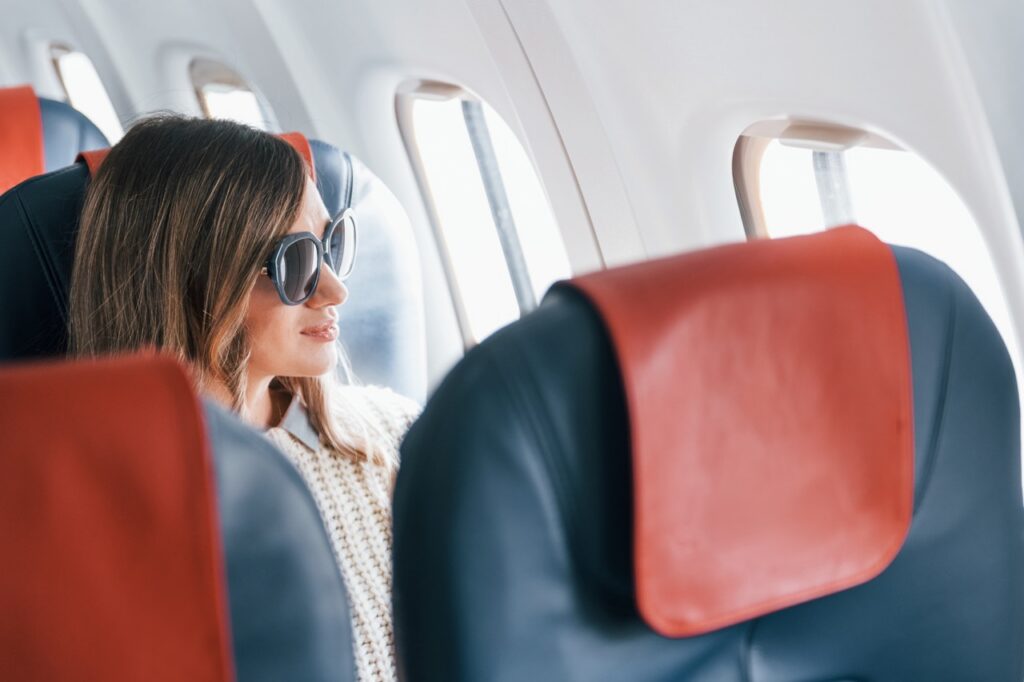
Whether you’re preparing for an upcoming trip or reading this from your gate at the airport, it’s okay if you don’t need every tip in this guide right now.
Some travelers feel reassured by understanding how flying works, while others are looking for techniques to help calm their nerves before take-off.
Rational Approaches: for those who feel better with facts and information
Air travel is one of the safest ways to travel, with accident rates experiencing a massive decline over the last several decades. Commercial airlines securely operate roughly 40 million flights every year. Across those millions of flights, fatal accidents remain incredibly rare; typically numbering between 3 and 8 in any given year.
Despite this, people often fear flying more than driving because of the blend of loss of control, unnaturalness of being in a tube suspended at 35,000 feet and lack of familiarity with the mechanics of flight. Statistically speaking, driving is much more dangerous, but because we do it almost every day, it feels like a routine, mundane activity and that familiarity breeds a false sense of security.
Every time you fly, you’re in the hands of highly trained pilots and professional cabin crew who are extensively prepared to handle a wide range of situations with far more training than the average person receives before getting behind the wheel of a car.
Security threats involving commercial aviation are extremely rare, thanks in part to multiple layers of security, including advanced passenger and baggage screening, intelligence sharing and strict airport security procedures. TSA locks play a small but important supporting role by allowing security authorities to inspect checked baggage when necessary, without damaging luggage, helping screening processes operate more efficiently at scale.
Emotional Approaches: for managing worry, stress and anxious thoughts
Identify Your Personal Triggers: Before you can address your fear, it helps to understand what’s driving it. Many anxious flyers aren’t afraid of flying itself, they’re reacting to a specific trigger, such as turbulence, a feeling of lost control or concern about having a panic attack. Identifying your trigger is often the first step towards managing it.
- Try Breathing Techniques: Use the 4-7-8 Breathing Method: Inhale through your nose for 4 seconds. Hold for 7 seconds. Exhale slowly through your mouth for 8 seconds. This physically forces your nervous system to calm down.
- Grounding Techniques: You can also shift focus away from anxious thoughts by identifying five things you can see, four you can touch, three you can hear, two you can smell, and one you can taste.
- Progressive Muscle Relaxation: Systematically tense and then completely release different muscle groups, starting from your toes and moving up to your head. This releases physical tension often hidden by stress.
Ultimately, be kind to yourself – remember that anxiety doesn’t mean danger and if your anxiety is particularly severe, consider getting professional support whether that’s from your doctor with a course of Cognitive Behavioral Therapy (CBT) or by going on a course like this one run by Easy Jet or this from Virgin Atlantic or this offering from British Airways.
Practical Tips: simple things you can do before and during your flight
Before the Flight
- Demystify Turbulence: Once you learn a bit about how planes work, you’ll understand that turbulence is entirely normal and safe. It is just like driving over bumps on a rough road.
- What’s That Sound? This is a great resource which talks you through the different sounds and sensations you’ll experience during your flight.
- Choose Your Seat: Book a seat over the wings. This area is the plane’s centre of gravity and experiences the least movement. You are also close to the emergency exit, if this is something that you find reassuring – plus you usually have some extra leg room.
- Meet the Crew: Say hi to the pilots or flight attendants when boarding. Seeing their calm professionalism can reassure you and you can also tell them that you’re nervous or anxious, if you feel like sharing.
- Avoid Caffeine and Sugar: Skip the airport coffee and sugary snacks. They spike your heart rate and mimic the physical sensations of panic.
During the Flight
- Engage Your Senses: Distract your brain with high-absorption activities. Noise-cancelling headphones, video games, a great movie, book or calming podcast can all help take your mind elsewhere.
- Stay Hydrated: Drink plenty of water. Dehydration worsens physical stress and anxiety symptoms.
- Homeopathy: Some people find that homeopathic remedies like Rescue Remedy can help. Ask your pharmacist or doctor for their recommendation.
Building Long-Term Confidence: ways to become more comfortable with flying over time
Overcoming a fear of flying is often a gradual process, rather than a single Eureka moment. The more positive flying experiences you accumulate, the more evidence your brain has that flying is safe and manageable.
Write down three things that went well: Take a moment to reflect on what went right. Did the aircraft take off safely? Did the turbulence pass exactly as the crew said it would? Did you manage your anxiety better than expected? Even if you felt nervous throughout the journey, the fact that you completed the flight is evidence that you can cope with flying. By consciously focusing on the many things that went smoothly, rather than searching for things that felt uncomfortable, you help your brain build a more balanced and positive association with air travel.
Focus on the destination, not just the journey: Remind yourself of the experiences, people or opportunities waiting for you when you arrive.
Acknowledge every success: Don’t write off a flight because you felt nervous at some point. If you boarded, flew and landed safely, that’s a win.
Confidence doesn’t come from never feeling anxious. It comes from repeatedly proving to yourself that you can fly safely and cope with those feelings when they arise. With time, knowledge and experience, many nervous flyers find that what once felt overwhelming becomes much more manageable.
Related Articles

September 2026
What Do You Have to Remove at Airport Security?
What comes off, what comes out of your bag and what you can skip if you've got PreCheck.
Read More
August 2026
How to Fly More Responsibly
Flying always has a footprint, but here are some tips that can meaningfully shrink yours.
Read More
August 2026
What Happens If Immigration Stops You at the Airport
This guide walks through why immigration stops happen and exactly what to do if it happens to you.
Read More


