 Back to all articles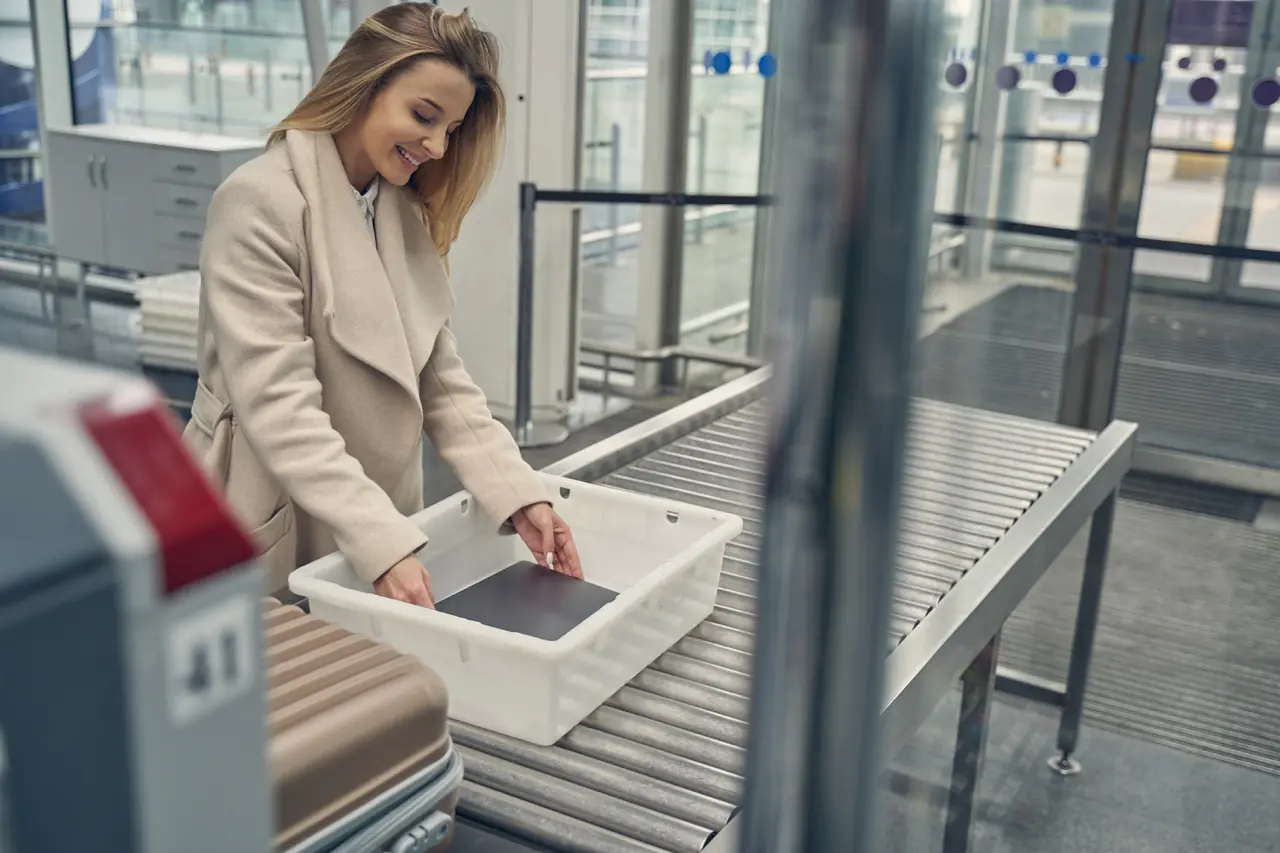



What Do You Have to Remove at Airport Security?
What you have to remove at airport security depends more on your airport’s screening equipment than on where you’re flying from. Modern 3D CT scanners let most travelers leave laptops and liquids packed away, while older X-ray checkpoints still require you to pull them out. Country-specific rules, such as whether you have to take off your shoes at the airport, layer on top of that.
That’s the short version. The longer version is that a lot of the stress at security comes from assuming the rules are the same everywhere; they’re not. Below is a checkpoint-ready breakdown: how to tell which kind of checkpoint you’re facing, what almost always comes off (and where), what’s country-specific and a few pro tips that make the whole process faster.
A few small habits like checking the signage, packing your liquids and electronics where you can reach them and locking both your checked and carry-on bags turn a stressful travel day into a calm one, wherever you’re flying from
Two Kinds of Checkpoints: Check the Signage First
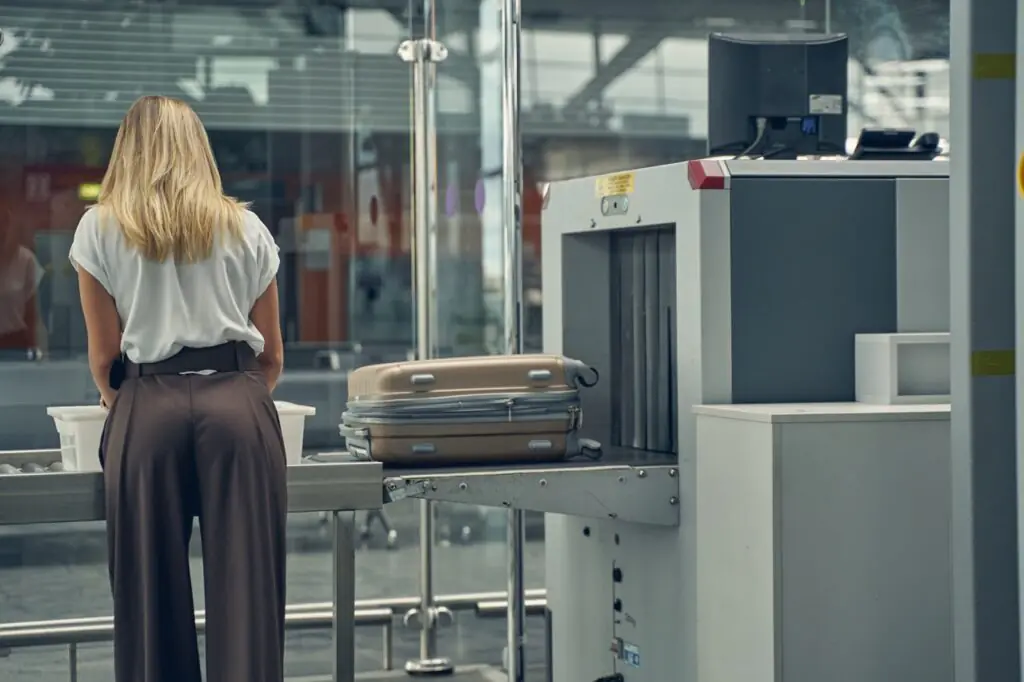
Before anything else, know this: airport security checkpoints run on one of two screening technologies and that’s the single biggest factor in what you need to remove. When you reach the front of the line, look for signage, as it will tell you either what to take out or that you can leave everything packed.
Classic X-Ray Machines
This is the traditional checkpoint most travelers are used to. You’ll typically need to remove:
- Electronics: laptops, and in some countries, power banks specifically. China, for example, requires travelers to pull out power banks for individual inspection regardless of what else is required.
- Liquids: gels, aerosols and pastes above the local limit (limits vary by country; see “Liquids” section below.
New CT (Computed Tomography) Machines
These 3D scanners image your bag’s full contents without you unpacking it, so laptops and liquids generally stay in your bag unless an officer asks you to pull something out specifically. This is being rolled out at airports worldwide. London Heathrow now runs these at every lane. Geneva has them on fast-track and several other lanes. Many more airports globally are adding them and where a CT scanner is in use, leaving everything packed is the standard.
You can’t assume which kind of checkpoint you’ll face, even at your home airport, since airports often run both types across different lanes. Watch out for the signage every time.
The Basics: What Almost Always Comes Off (and Where)
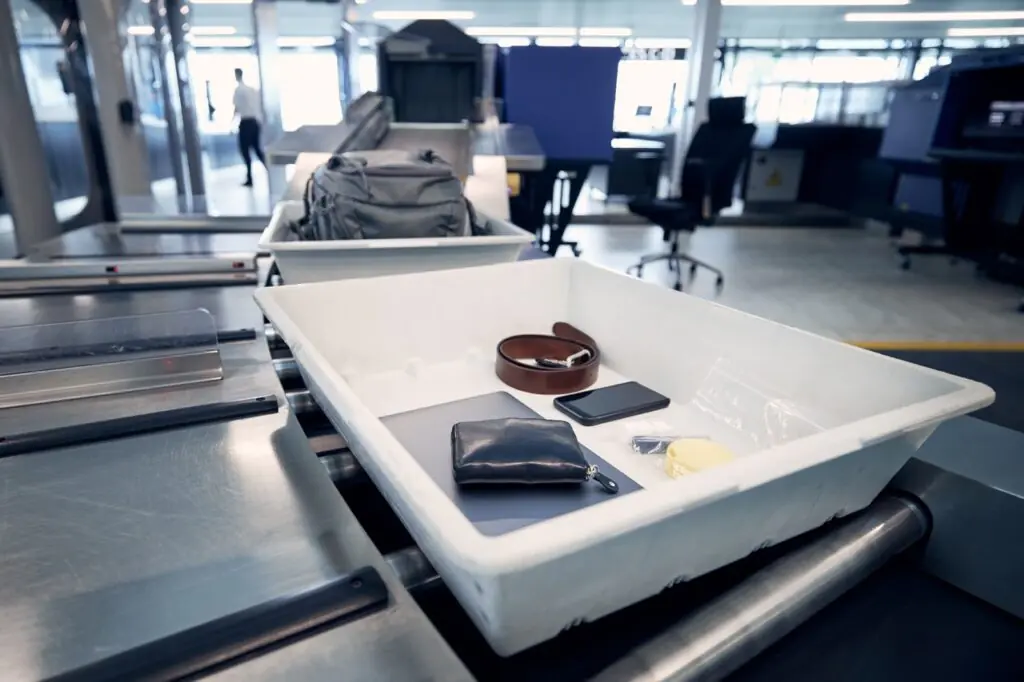
Removing shoes, belts and jackets is common at classic X-ray checkpoints, but it’s not universal and it is changing.
- Belts: In most countries metal buckles can set off the walk-through metal detector and it is standard practice to go with the flow and take them off.
- Jackets, coats and heavy outerwear: This includes hoodies with zippers, blazers and scarves with metal clasps.
- Hats: This one is universal: hats always come off, no exceptions.
- Bulky jewelry, like large metal necklaces, statement belts or anything with a lot of metal hardware.
Smaller jewelry, wedding bands and stud earrings usually don’t need to come off, but if you’re wearing something large and metallic, it’s faster to just take it off before you reach the scanner rather than get pulled aside.
Do you have to take your shoes off at the airport?
Following a nationwide policy change announced by Homeland Security Secretary Kristi Noem on July 8th, 2025, the TSA no longer requires travelers to remove their shoes at standard checkpoints. This ended a rule which had been in place since 2006, and it applies whether or not you have a TSA PreCheck. However, you may have to take your shoes off at your airport if an officer asks you to remove your shoes at a random or secondary screening and boots or shoes with a lot of metal hardware can trigger the metal detector regardless of the policy change. If you are flying through a US airport, slip-on shoes will save you time.
Outside the US, shoes generally stay on at well-signed checkpoints in much of Europe and in Japan, South Korea and Singapore, though this has always varied by airport rather than by a single national rule.
Liquids: The 3-1-1 Rule (and Its Exceptions)
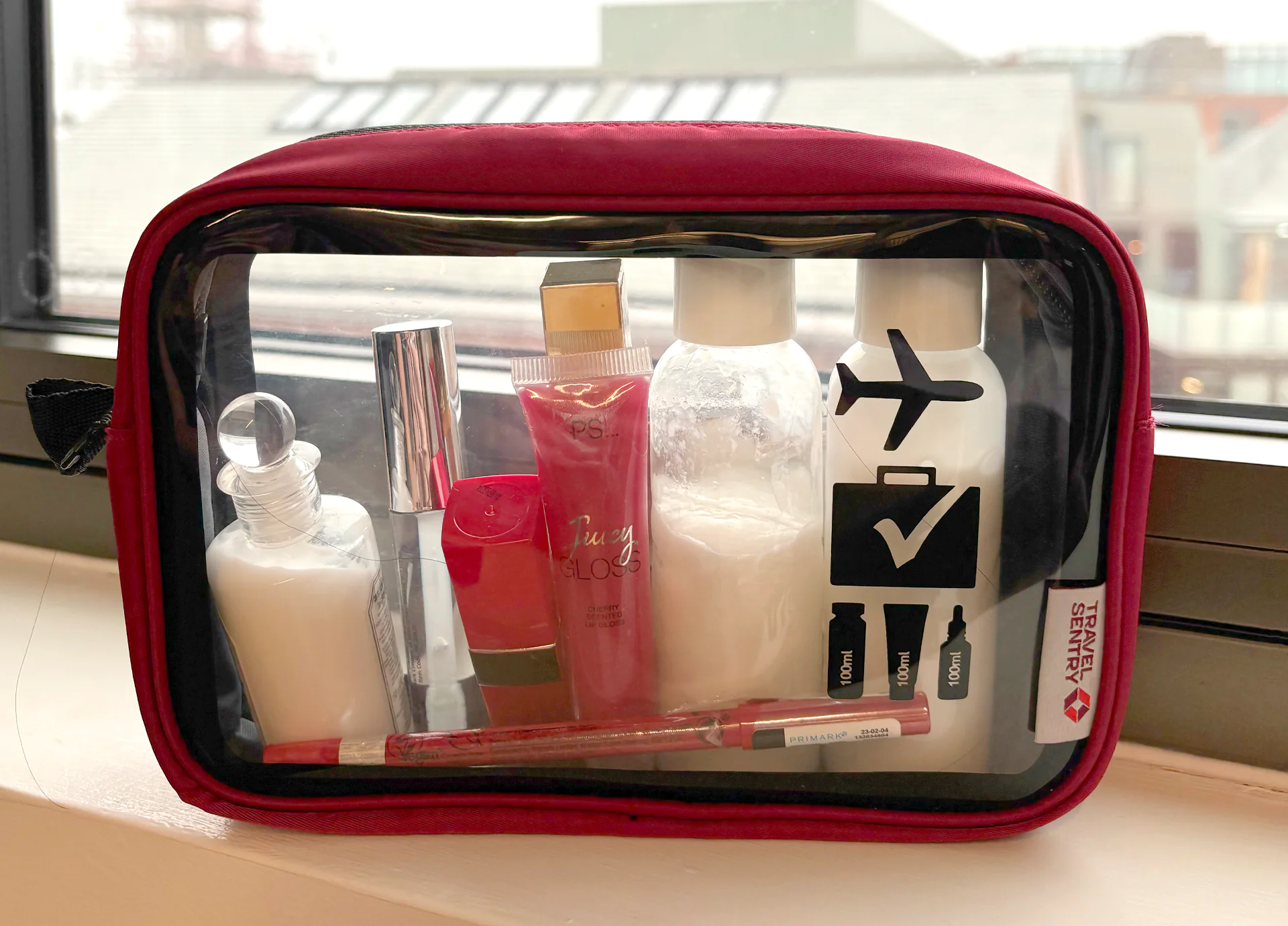
At a US classic X-ray checkpoint, the rule is 3.4 oz (100ml) or less per container, all fitting in a single 1-quart clear bag (see TSA’s official liquids rule). Your water bottle is the exception; it just needs to be empty before you reach the scanner. Bring an empty one and refill it after security; it’s a simple way to save money and cut down on plastic waste during your traveling experience.
This limit isn’t universal and it isn’t even fixed within a single country. It depends on the checkpoint’s scanner, as covered above. Always check the rule for your specific departure and connecting airports rather than assuming the 100ml figure applies everywhere.
Pro tip: Pack your liquids somewhere with easy access, like the very top of your small bag or an outer pocket, so you’re not digging through dirty clothes and packing cubes while the line backs up behind you.
Also useful is our guide on Airline Carry-On Rules Explained: Liquids, Restrictions & What to Expect.
Officers will ask you to empty your pockets and this is where checkpoints slow down the most.
Before you step up, clear out:
- Phone
- Wallet, especially anything with a credit card or loose coins
- Keys
- Any small electronics, like a portable charger or a SIM card ejector tool
- Gum, mints or anything metallic-wrapped
Pro tip: Keep an empty jacket pocket or a small pouch just for this walk-through moment, so everything goes in one place instead of getting distributed across three different pockets and a coat.
USA: Special Cases: PreCheck, Global Entry and CLEAR
These are US-specific programs. If you’ve enrolled in TSA PreCheck, you generally get to skip several of the classic checkpoint steps:
- Shoes stay on
- Laptops can stay in your bag
- Liquids can stay in your bag (still within the 3-1-1 limits)
- Belts often stay on, though this varies by officer and airport
Global Entry includes PreCheck benefits and also speeds up the customs process when you land internationally. CLEAR doesn’t replace the physical screening but verifies your identity faster, so you skip the ID-check line and move straight to the bins.
If you fly through US airports more than a couple of times a year, the application fee for PreCheck often pays for itself in saved time and reduced stress alone.
International Airports: Country-Specific Quirks
Beyond the X-ray vs. CT distinction above, a few country-specific rules are worth knowing:
- Some Asian airports (Japan, South Korea, Singapore). Efficient, well-signed checkpoints where shoes generally stay on, but at non-CT lanes, expect liquids and laptops to still come out.
- China. Power banks must be pulled out for individual inspection, regardless of scanner type.
- Some countries will ask you to power on electronics to prove they work which is a security measure used in parts of the US and Europe as well during heightened alert periods.
When in doubt, arrive a bit earlier and follow the signage. Airport staff would much rather guide you than rush you.
New Tech: Full body scanner millimeter wave scanners
There is a new kind of scanner you will find in more airports. These replace the walk through metal detectors, and can detect objects on or inside a person’s body for security screening purposes, without physically removing clothes or making physical contact. Unlike metal detectors, full-body scanners can detect non-metal objects, which became an increasing concern after various airliner bombing attempts in the 2000s.
What you need to know: Look ahead when you enter the line to see if you will be going through one of these and be prepared because EVERYTHING needs to come out of your pockets. Even a tissue.
Read our article on How Airport Security Scanners Work.
Locking Your Bags: Checked and Carry-On
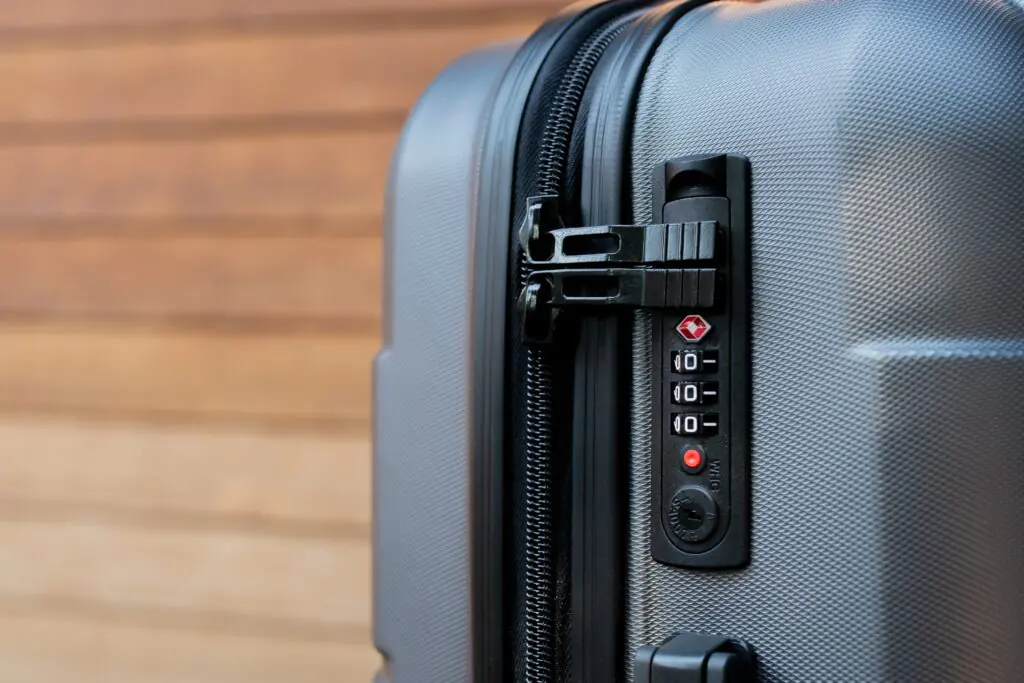
Checked bags get physically inspected too and you won’t be there when it happens. If your bag is locked with a Travel Sentry TSA lock, the screener can open it with a special master tool and re-lock it before it heads to your flight, no damage done. A lock without that mark may simply get cut off if your bag is selected.
It’s worth locking your carry-on too, not just your checked bag. If your carry-on gets gate-checked, it travels with the hold luggage the rest of the way, so a lock keeps it secure until you’re reunited with it at the carousel. And even bags that never leave the cabin benefit: there have been incidents of passengers going through overhead bins during long, overnight flights while other passengers sleep. If you won’t be watching your carry-on the whole flight, locking it is a simple way to protect it.
Here’s Why You Should Always Consider Locking Your Carry-On.
Packing Smart So Security Goes Faster
A little packing strategy goes a long way toward a stress-free checkpoint experience, whatever kind you end up facing:
Use packing cubes
A little packing strategy goes a long way toward a stress-free checkpoint experience. Separate liquids, electronics, and clothing, so you’re not unpacking your entire bag on a public counter if you do hit a classic X-ray lane.
Keep your laptop and toiletry bag near the top
Your laptop and toiletry bag should sit near the top of your carry-on or in a designated pocket. Digging through a full bag while a line backs up behind you is one of the most avoidable showdowns at security.
Standardize Your Pockets
Similar to the toothbrush rule at home, keep your phone, wallet and credit card in the same pocket every time you fly. Once pocket emptying becomes automatic, you can stop worrying about where you’ve put those important items.
Wear slip-on shoes
Choose slip-on shoes at US checkpoints when you can. It’s a small choice that adds up over a lifetime of flights.
Back up your Boarding Pass
Keep a screenshot or printed copy of your boarding pass as backup. This is useful if you lose signal or your airline’s app glitches. Pair it with a portable charger, since a screenshot won’t help if your phone is fully dead.
None of this replaces good judgment at the checkpoint, but it does mean fewer surprises.
Quick Checklist: Airport Security Checklist: What to do before you reach the scanner
This checklist assumes a classic X-ray checkpoint at a US airport. If you see CT-scanner signage, most of this doesn’t apply, leave your bag packed and follow the officer’s instructions. The right mindset going in: your job is to make the scanner’s job easy. Give it a clear, unobstructed view of your bag and body, move with purpose rather than rushing and treat whatever the officer in front of you says as the final word over anything on this list. Calm and cooperative gets you through faster than fast and flustered ever does.
- Shoes generally stay on (US checkpoints, as of July 2026); boots or shoes with a lot of metal may still alarm the walk-through metal detector and random checks still happen – listen to the security officer at the checkpoint for clarity
- Belt off
- Jacket, coat or hoodie off
- Hat off
- Laptop out of its bag, alone in a bin
- Power bank out, if flying through China
- Liquids bag out and visible, within your airport’s limit
- Water bottle emptied
- Pockets cleared: phone, wallet, keys, coins
- Bulky jewelry removed
Don’t forget: If you’re checking a bag, double check it doesn’t contain anything prohibited that you meant to keep in your carry-on, like medication, chargers or your travel documents. Once that checked bag disappears down the belt, it’s gone until baggage claim.
Frequently Asked Questions
Do I need to take anything out of my bag at airport security?
It depends on the scanner, not just the country. Classic X-ray checkpoints require laptops and liquids out; newer 3D CT scanners, now running at airports like London Heathrow and Geneva and many others worldwide, let you leave everything packed. Look for signage at the checkpoint.
Do I have to take my shoes off at airport security?
This rule changed nationwide on July 8th, 2025, when Homeland Security Secretary Kristi Noem announced the TSA would no longer require shoes off at standard checkpoints. Random and secondary screenings may still involve a shoe check.
Can I keep my laptop in my bag with TSA PreCheck?
This is also a US-specific answer: yes, PreCheck typically lets you leave your laptop and 3-1-1 liquids in your carry-on. Outside PreCheck, whether your laptop needs to come out depends on whether you’re at a classic X-ray or CT checkpoint.
What liquids can I bring through airport security in my carry-on?
At a US classic X-ray checkpoint, containers of 3.4 oz (100ml) or less, fitting inside a single 1-quart clear bag. Limits vary elsewhere and by checkpoint type. Some UK airports with CT scanners allow containers up to 2 liters, for example.
What happens if security needs to inspect my checked bag and it’s locked?
If it’s secured with a Travel Sentry TSA lock, the screener can open it with a master tool and re-lock it without any damage. A lock without a recognized mark may be cut off instead.
Should I lock my carry-on too, not just my checked bag?
Yes! A locked carry-on stays secure if it gets gate-checked and it protects your belongings from opportunistic theft from overhead bins on flights where you’re not watching it, such as long overnight routes.
Related Articles

October 2026
Can You Bring Slime through Airport Security on a Plane?
Here's a quick guide to container limits, squishy toys and the flight home.
Read More
October 2026
Damaged Passport on Holiday: What to do before you fly home
What do when your passport is damaged on holiday and how the replacement process works.
Read More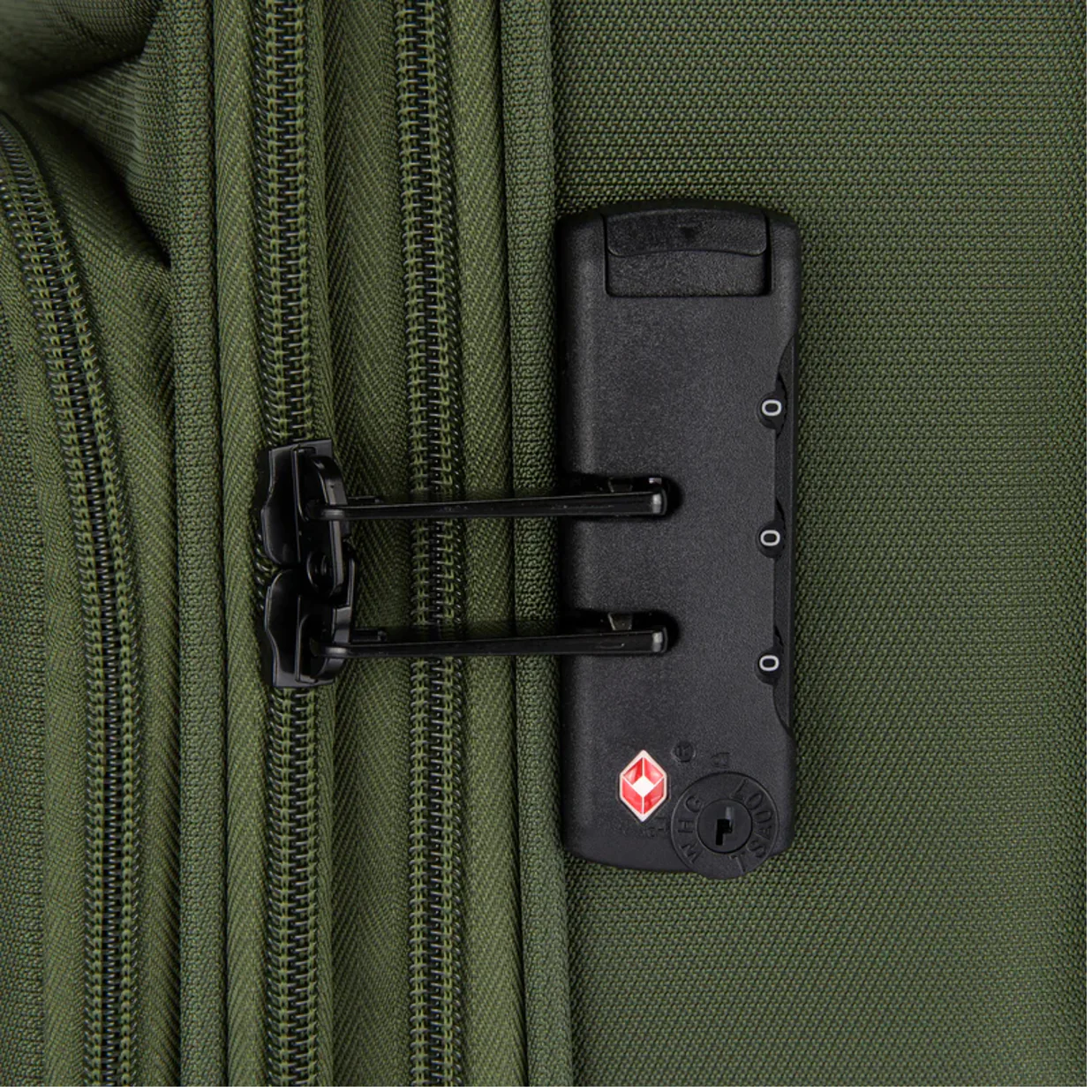
October 2026
How to Tell If My Lock Is TSA Accepted
How to spot the Travel Sentry Red Diamond, find the lock code and avoid a cut lock at the airport.
Read More


