 Back to all articles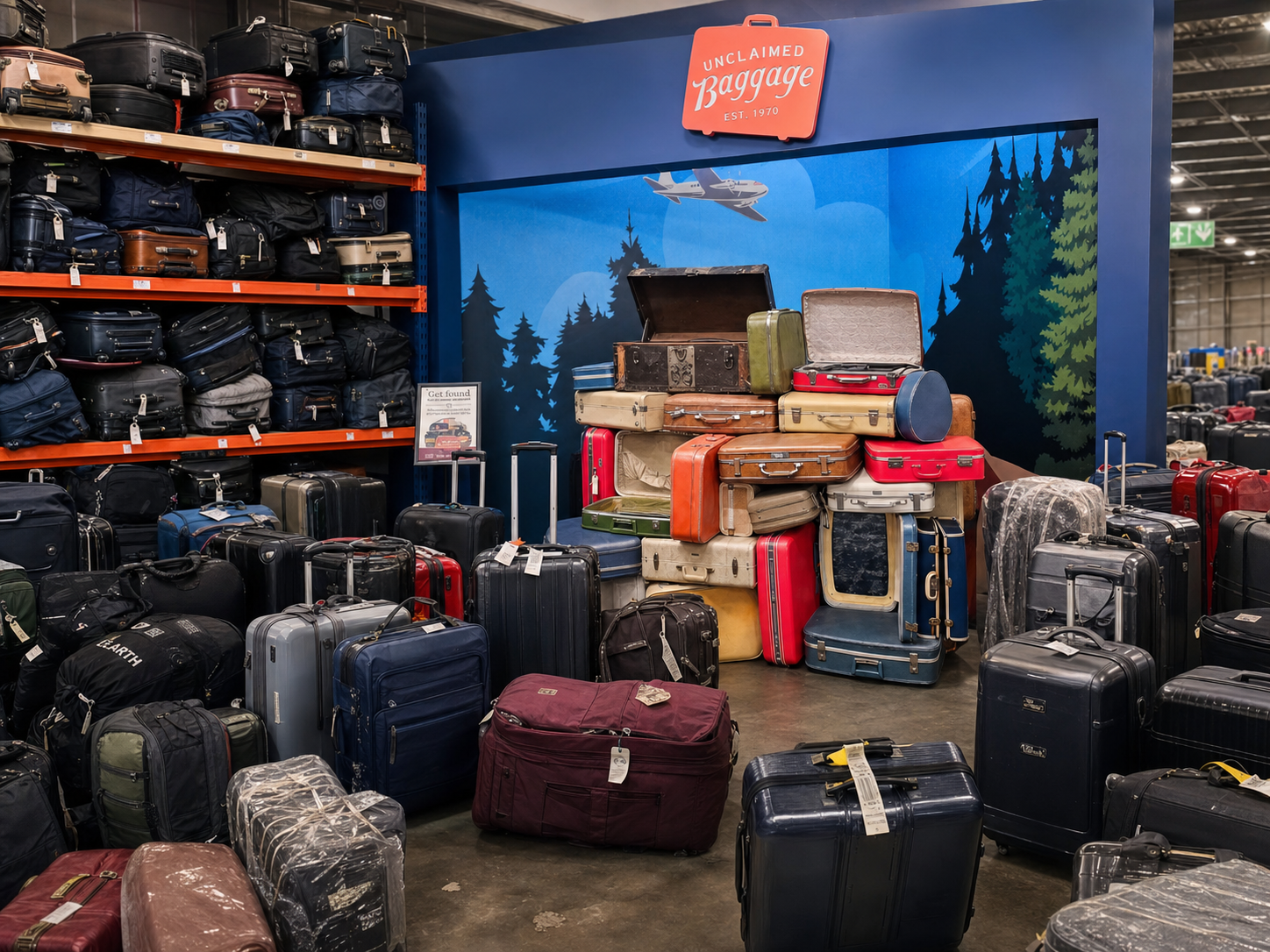



What Happens to Unclaimed Luggage?
Most checked bags that go missing come back quickly: roughly 92% of mishandled bags are reunited with their owners, usually within a day or two. The small share that are never claimed spend about three months in airport storage, after which they are considered orphaned and are sold, donated, or recycled — often through specialist resellers and auction houses. This guide walks through the full journey a bag takes when it doesn’t show up on the carousel.
How many bags get lost, and how many come back?
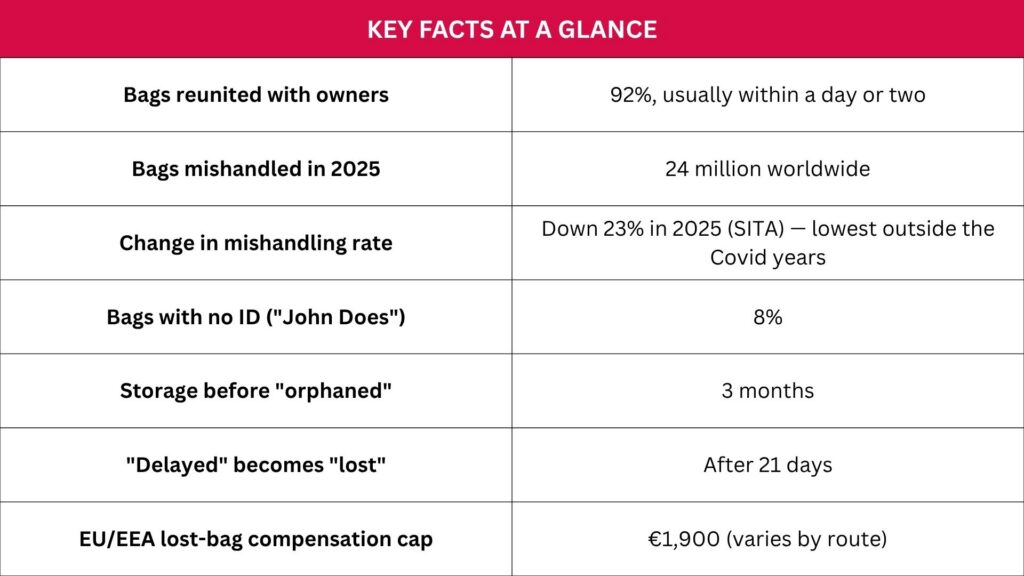
About 92% of mishandled bags are returned to their owners, usually within a day or two. This isn’t luck — airlines use increasingly sophisticated tracking technology. In 2025, airlines mishandled around 24 million bags worldwide, but the trend is improving: mishandling rates fell 23% in 2025, according to research from SITA, the lowest level outside the Covid years. Every lost bag costs airlines money and customer trust, so the industry keeps investing in fixing it. “Better” is still a way off “perfect,” though – when a bag isn’t found quickly, it enters a system that can feel like a black hole.
What’s the difference between delayed and lost baggage?
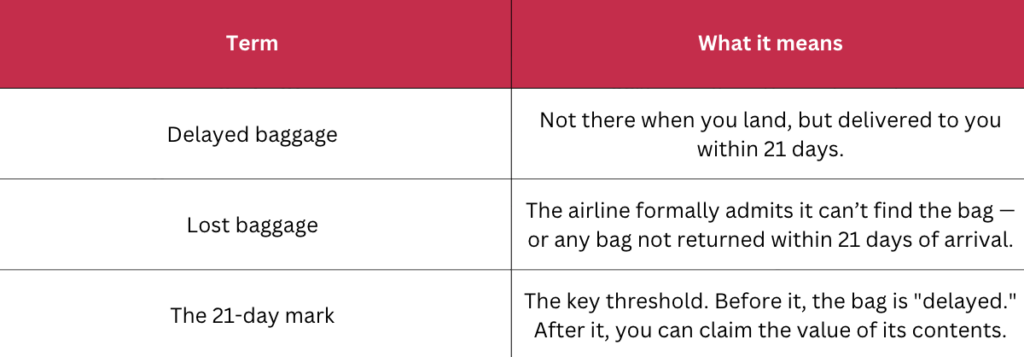
A bag is “delayed” if it reaches you within 21 days of your arrival, and officially “lost” once the airline admits it can’t find it or 21 days pass without its return. The distinction matters because it determines when you can file a claim for the value of what you lost.
How do airlines try to find a missing bag?
The moment a bag misses your flight it is logged into a baggage-tracking database, and the system works to reroute it so it can catch up with you. If the external tags have fallen off, handlers open the bag and search for anything that identifies the owner – a name, phone number or address. Most of the time they find something to send the bag on its way home.
Around 8% of bags are “John Does,” with no identifying information at all. After about three months in airport storage, those bags are officially considered orphaned and that’s when their second life begins.
What happens to luggage that’s never claimed?
Unclaimed bags are no longer incinerated or dumped as they once were — today they are sorted by specialist companies and resold, repurposed, donated or recycled. Behind the scenes, these companies receive truckloads of luggage at their processing facilities. Staff sort every item and decide what happens to it:
- Clothing is often sent to commercial laundries and cleaned before sale.
- Electronics are tested and fully wiped of personal data.
- Trained specialists assess and price everything for the sales floor.
- Anything that doesn’t sell is frequently donated through charity partnerships — locally, nationally, or globally — or responsibly recycled.
Very little goes to waste.
Who buys unclaimed luggage?
Unclaimed baggage has become a consumer phenomenon, with two main models: resale of sorted contents, and auctions of unopened “mystery” bags. The best-known players are:
- Unclaimed Baggage, based in Scottsboro, Alabama, buys lost luggage from airlines and resells the contents — sometimes, remarkably, back to the original owners. It has grown into a genuine retail destination.
- Greasby’s in the UK and Mulberry Bank in Scotland run a different model, auctioning unopened mystery bags to collectors and thrill-seekers gambling on what’s inside.
The appeal is easy to understand: nearly-new luggage and goods at a fraction of retail price, or the thrill of gambling on a mystery box that could hold treasure or trash.
What are the strangest things found in unclaimed luggage?
Over the decades, Unclaimed Baggage has reported some genuinely jaw-dropping discoveries. A few of the most famous finds reported over the years include:
- A 40.95-carat natural emerald, reportedly one of the most valuable single items ever pulled from a lost bag, later dubbed the “Unclaimed Emerald.”
- A guidance system for an F-16 fighter jet, military hardware that had to be returned to the U.S. Navy.
- A full suit of medieval armour, the kind of thing you’d expect in a museum, not a suitcase.
- Ancient Egyptian artifacts, including items reported to be thousands of years old.
- A camera that had been aboard a NASA space shuttle, later returned to the space agency.
The everyday finds carry their own value too: phone chargers, headphones, sunglasses, jewellery, and designer clothing are the bread and butter of the resellers.
What compensation are you owed if your bag is truly lost?
If a checked bag is lost, you are entitled to compensation equal to its value — either when the airline admits it’s gone, or when it hasn’t been returned within 21 days of your flight. Compensation is always capped, and the limit varies by where you’re flying.

It’s worth checking the specific limit for your route, and your travel insurance — which can sometimes be more generous than the airline’s minimum.
How do you keep your bag off the “unclaimed” pile?
The single most effective step is labelling your bag inside and out, because external tags fall off and an ID card inside is what handlers rely on when they open it. Perfect baggage handling doesn’t exist yet, but you can dramatically improve your odds:
- Label your bag inside and out. External tags fall off; an ID card inside the bag is what handlers rely on when they open it. This single step makes all the difference.
- Remove old tags before each trip and make sure your new paper tags are securely applied.
- Photograph your packed bag and your baggage tag. If the worst happens, you’ll have key documentation to make a claim.
- Pack smart. Keep irreplaceable items, medication, and valuables in your carry-on, not your checked bag.
Frequently asked questions
How long before luggage is officially “lost”?
A bag is “delayed” if it reaches you within 21 days of arrival. After 21 days or once the airline admits it can’t find the bag, it is officially “lost,” and you can claim the value of its contents.
What percentage of lost bags are recovered?
Roughly 92% of mishandled bags are reunited with their owners, usually within a day or two.
How long do airports hold unclaimed baggage?
About three months. After that, a bag with no identifying information is considered orphaned and moves into the resale or auction system.
Can you buy unclaimed luggage?
Yes. Unclaimed Baggage in Scottsboro, Alabama resells sorted contents, while Greasby’s in the UK and Mulberry Bank in Scotland auction unopened mystery bags.
What happens to items in unclaimed bags?
They are sorted, then resold, donated, or recycled. Clothing is laundered, electronics are tested and wiped of personal data, and unsold items are often donated to charity partners.
How much compensation can you get for a lost bag?
The value of the contents, up to a cap. Within the EU/EEA the limit is roughly €1,900; on many other routes it may be lower depending on the governing rules.
How can I stop my bag from getting lost?
Label it inside and out, remove old tags before each trip, photograph the packed bag and its tag, and keep valuables in your carry-on.
Your lost bag won’t be incinerated or simply vanish the way it might have a generation ago. There’s now a trail, a process, and even a second life for the small fraction of bags that never make it home. But the goal is still to never join that pile in the first place: ninety-two percent of bags come home, and with a little preparation you can make sure yours is one of them.
Related Articles

September 2026
What Do You Have to Remove at Airport Security?
What comes off, what comes out of your bag and what you can skip if you've got PreCheck.
Read More
August 2026
How to Fly More Responsibly
Flying always has a footprint, but here are some tips that can meaningfully shrink yours.
Read More
August 2026
What Happens If Immigration Stops You at the Airport
This guide walks through why immigration stops happen and exactly what to do if it happens to you.
Read More


