 Back to all articles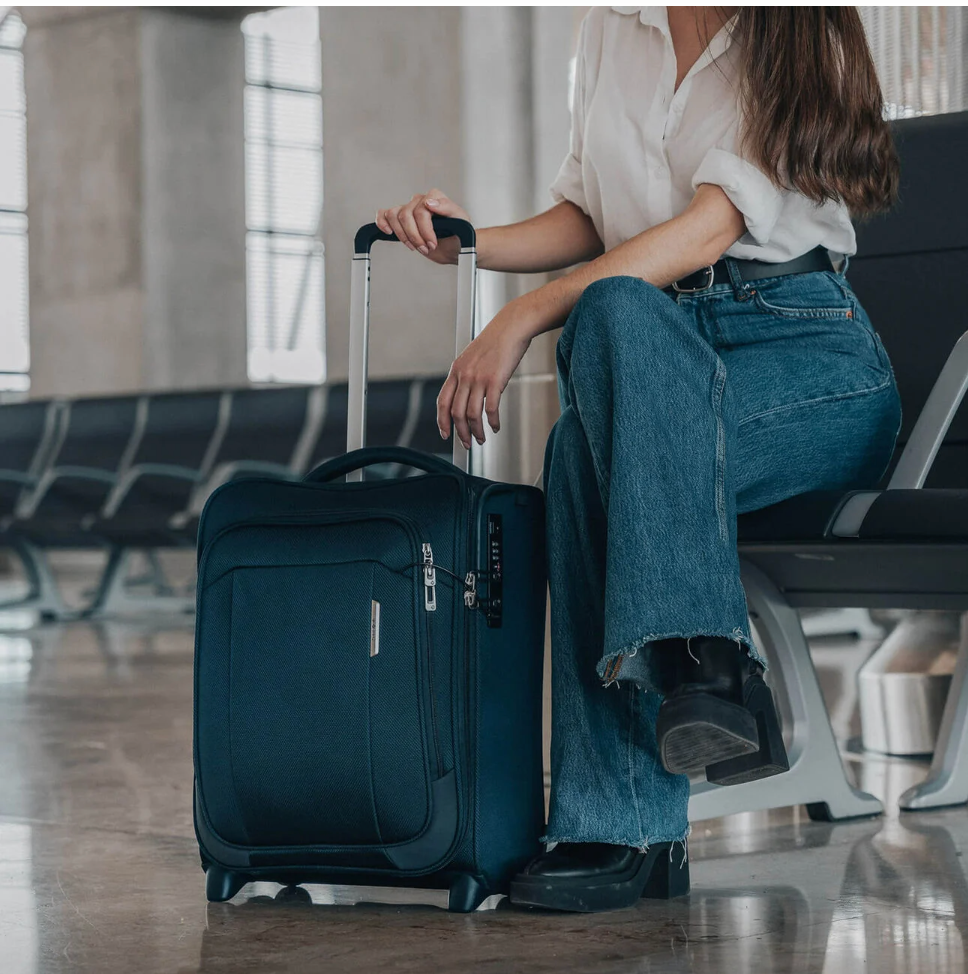



The Space Under Your Seat: Why Under-Seat Luggage Is Changing
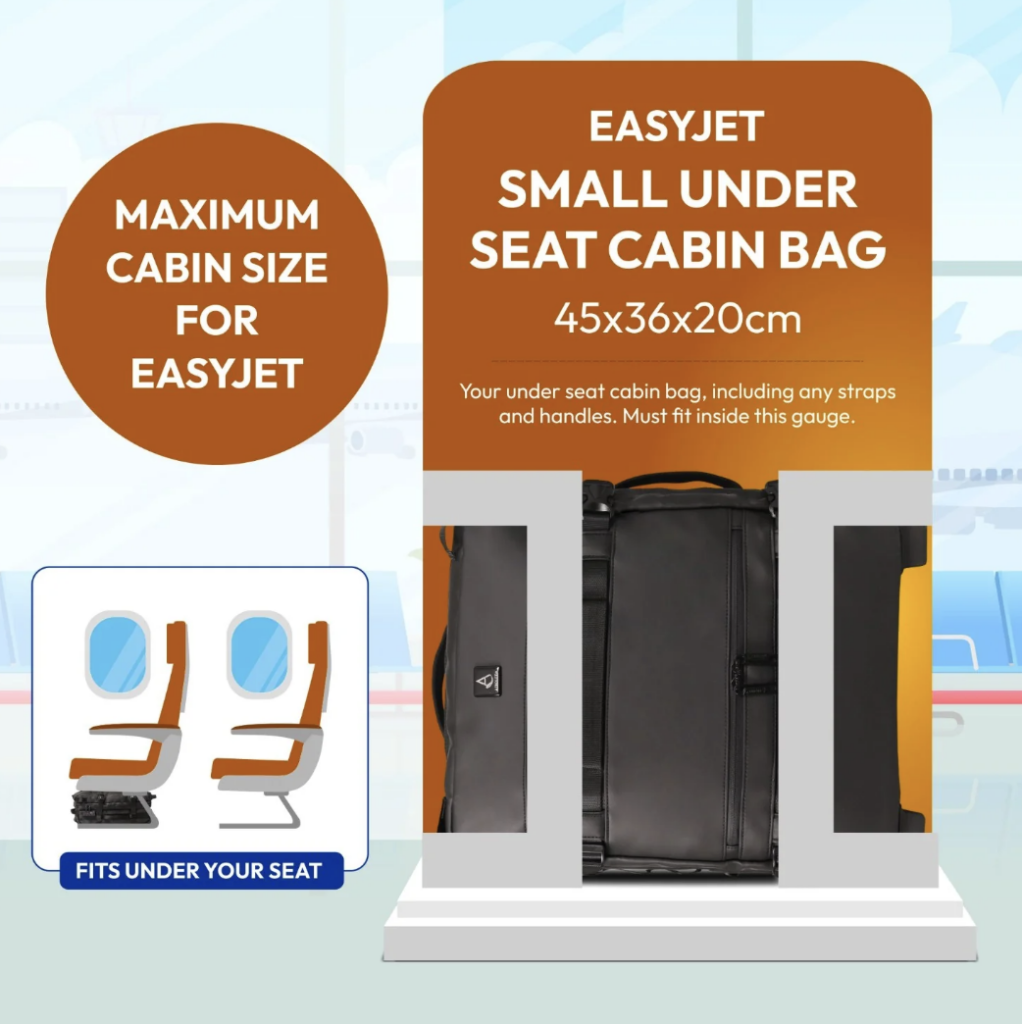
Last year, we noticed a significant increase in under-seat cabin baggage options as airlines began enforcing cabin baggage rules more strictly.
In some cases, travellers are allowed only an under-seat personal item, unless they pay to upgrade their fare.
What started as a basic, entry-level category is quickly evolving.
More under-seat bags on sale today include Travel Sentry-approved locks as standard, reflecting how traveller expectations have changed.
What Are Travellers Putting Under the Seat?
Travel Sentry’s 2025 consumer research showed that the items travellers most often lock are:
- Phones and laptops
- Cameras
- Travel documents
- Jewellery
- Medication
If those items aren’t in the overhead compartment, they’re either on you or under the seat in front of you, which naturally increases demand for secure, lockable under-seat luggage.
Why Add a TSA Lock to an Under-Seat Bag?
Originally, TSA locks were marketed for checked luggage, allowing airport security to inspect bags without damaging them.
So why are we now seeing them on carry-on and under-seat luggage?
Because travellers don’t make a huge distinction between checked and cabin luggage when it comes to security. What they recognise is that a Travel Sentry Approved lock is airport-approved and globally recognised.
The red diamond symbol signals that:
- The lock is compatible with airport security
- It’s designed specifically for travel
- It’s a secure and trusted option
Even inside the cabin, a lock can provide peace of mind. After all, everyone leaves their seat at some point during a flight or might be seated away from friends or family who would typically keep an eye on belongings.
And sometimes carry-on bags are unexpectedly gate-checked when overhead bins are full. Better for your carry-on bag to be locked just in case.
Why Under-Seat Bags Matter More on Basic Fares
Travellers continue to fly frequently, but many are choosing:
- Low-cost airlines
- Basic economy fares
- No checked baggage
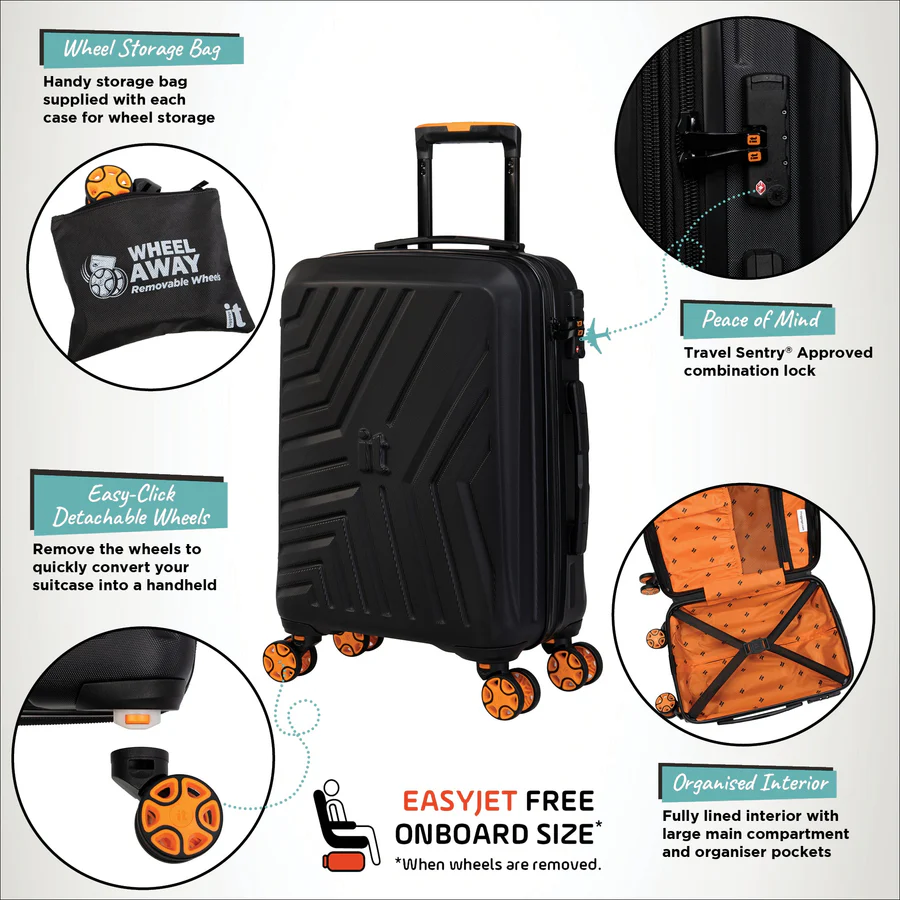
That means everything for the trip may need to fit under the seat.
When your essentials are stored in one small bag, features like durability, organisation, aesthetics and security matter more than ever.
Under-seat luggage is no longer just a secondary bag. For many travellers, it’s the only bag.
What Features Should You Look for in an Under-Seat Bag?
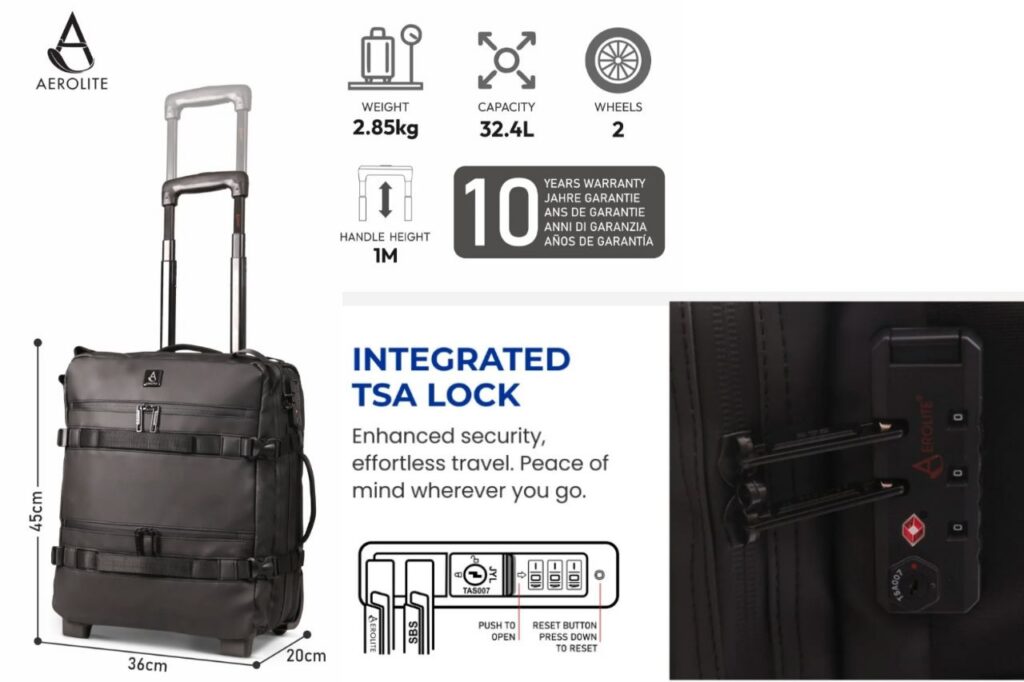
If your under-seat bag is your primary luggage, look for:
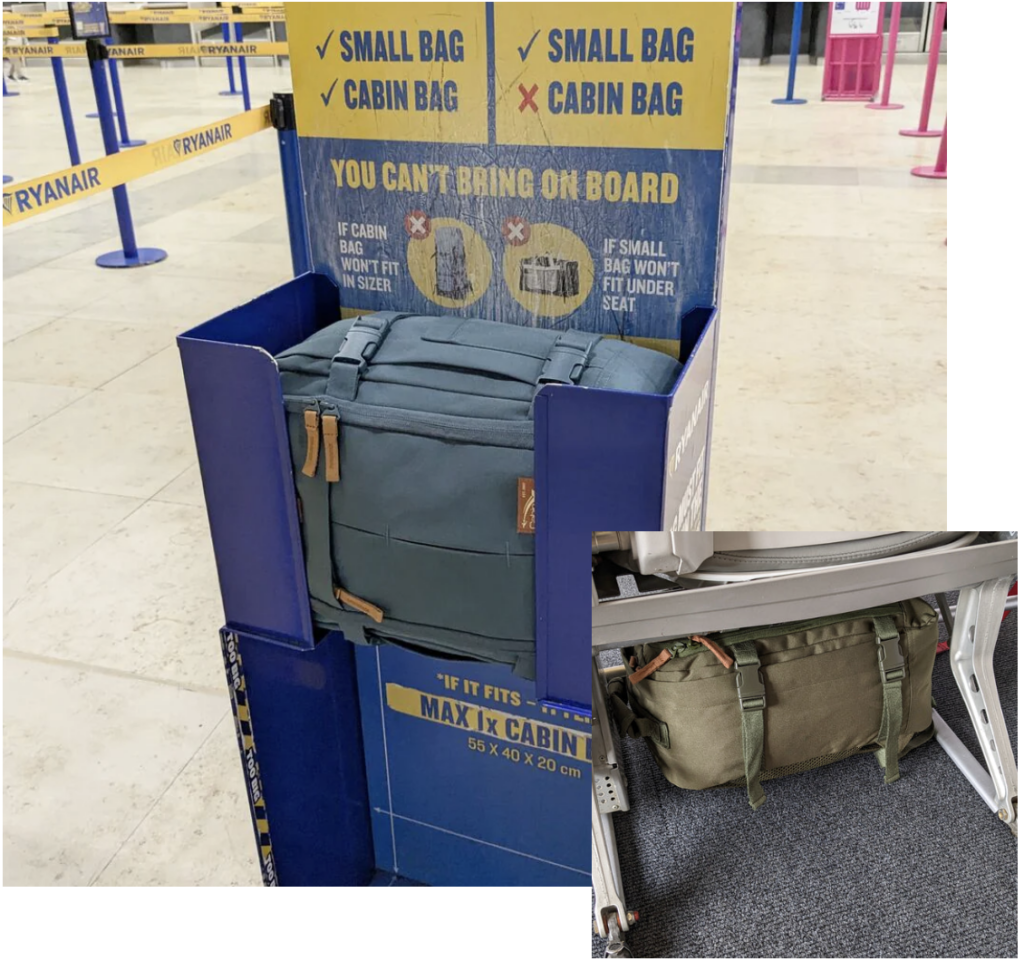
Dimensions that meet airline limits (check cm and inches)
Clear capacity in litres
Lightweight but robust construction
Compact, smooth-rolling wheels
External compartments for easy access
Compression straps to maximise space
A Travel Sentry-approved lock
How to Maximise Packing in an Under-Seat Bag
Small space requires smart packing.
Try these tips:
- Wear your bulkiest shoes and outerwear
- Roll clothes instead of folding
- Use packing cubes
- Fill every available gap
- Keep electronics and liquids accessible for security screening
Not every airport allows laptops and toiletries to remain in your bag during screening. Easy access can help you move through security faster.
The Real-World Separation Scenario
Even if you plan to carry your bag onboard, situations change:
- Overhead bins fill up
- Aircraft change
- Boarding restrictions apply
In those moments, a carry-on can quickly become checked baggage.
While overhead space can disappear, the space under the seat in front of you is almost always available.
FAQs: Under-Seat Luggage & Personal Item Rules
Which airlines only allow an under-seat bag on basic fares?
Airline rules change frequently, but stricter enforcement is commonly reported from:
Europe
- Ryanair
- Wizz Air
- Norwegian
- Volotea
- EasyJet (basic fare includes under-seat item only)
United States
- Frontier
- Spirit
- United (basic economy)
Always check your airline’s current baggage rules before travelling.
You can also use our Carry OK tool to compare airline size limits.
What size should an under-seat bag be?
Under-seat bag size limits vary by airline. Many personal item allowances are smaller than standard carry-on dimensions.
Always measure your bag including wheels and handles and compare it against your airline’s published limits before flying.
Can an under-seat bag be gate-checked?
Yes. Even if your ticket includes an under-seat item only, operational changes or aircraft swaps may require bags to be gate-checked at the airline or airport staff’s discretion.
Choosing a bag with a secure, Travel Sentry-approved lock can help protect your belongings if that happens.
Is it worth locking a carry-on or personal item bag?
Yes, especially if you carry valuables such as electronics, travel documents or medication.
A Travel Sentry-approved lock allows airport security to inspect your bag without damage if required, while also helping deter opportunistic theft.
What is the difference between a personal item and a carry-on bag?
A carry-on bag typically fits in the overhead compartment.
A personal item (or under-seat bag) must fit under the seat in front of you and is often the only bag included in basic economy fares.
Related Articles
September 2026
What Do You Have to Remove at Airport Security?
What comes off, what comes out of your bag and what you can skip if you've got PreCheck.
Read More
August 2026
How to Fly More Responsibly
Flying always has a footprint, but here are some tips that can meaningfully shrink yours.
Read More
August 2026
What Happens If Immigration Stops You at the Airport
This guide walks through why immigration stops happen and exactly what to do if it happens to you.
Read More


