 Back to all articles
09 March 2026


What Do TSA Scanners See? How Airport Security Scanners Work
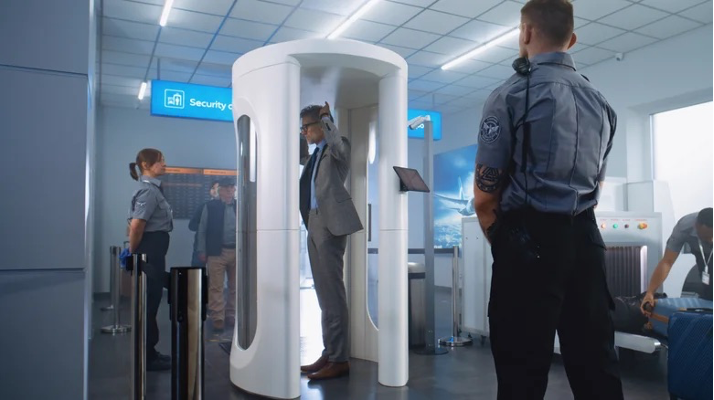
If you’ve ever stepped into an airport body scanner and raised your arms overhead, you’ve probably wondered the same thing millions of travelers ask every day: What do TSA scanners actually see?
Airport security technology has become a routine part of modern travel, yet the machines themselves often remain a mystery. You might imagine security officers viewing detailed body images or assume scanners can see everything inside your clothing or luggage.
The reality is far less dramatic and far more practical.
Airport security scanners are designed with a very specific goal: to detect potential threats quickly while protecting passenger privacy.
They are not designed to examine passengers in detail. Instead, they help security authorities identify unusual objects that could pose a safety risk.
Understanding what TSA scanners see and how TSA scanners work can make the airport security process feel far less mysterious and explain why most passengers pass through screening in just a few seconds.
Why Airports Use TSA Scanners
Airport security systems are designed around one simple principle: Identify potential threats before passengers board an aircraft.
For decades, airports relied primarily on metal detectors. These devices were effective at detecting metallic objects such as guns, knives or tools.
However, modern security concerns require detection of non-metallic threats as well, including plastic explosives, ceramic weapons or composite materials that may not trigger traditional metal detectors.
This is where body scanners became essential.
Body scanners allow security authorities to identify objects concealed under clothing, regardless of the material they are made from.
How Do TSA Scanners Work?
To understand how TSA scanners work, it helps to look at the technology used in modern airport screening systems.
Most major airports today use millimeter wave scanners, a technology that uses extremely low-energy radio waves.
Here’s what happens when a passenger enters the scanner:
- The scanner emits harmless millimeter-wave signals.
- These waves bounce off the passenger’s body and any objects on it.
- Sensors measure how the waves reflect back.
- A computer analyzes the reflections and identifies anything unusual.
Different materials reflect radio waves differently. The system compares the reflected signals to the expected shape of the human body.
If something disrupts that pattern, e.g, an object hidden under clothing, the system detects it and flags areas where something unexpected may be present. The entire process takes just a few seconds.
What Do TSA Scanners See?
One of the biggest misconceptions about airport security scanners is that officers see a detailed image of passengers.
This was a concern in the early days of body scanning technology, when some systems generated more detailed outlines.
Today, modern scanners use Automated Target Recognition (ATR) software, which removes the image entirely.
So what do TSA scanners see now?
Instead of displaying the passenger’s body, the system produces:
- A generic human outline
- Highlighted areas where the scanner detected something unusual
- A prompt indicating where additional screening may be required
Security officers see a neutral figure rather than an actual body image. If the scanner detects nothing unusual, the screen simply displays “OK.” The passenger then continues through the checkpoint without further inspection.

Body scanners are designed to detect items such as:
- Weapons
- Explosives
- Plastic or ceramic objects
- Dense materials hidden under clothing
- Items taped to the body
- Tools or sharp objects
The technology focuses on objects that do not match the expected shape or density of the human body.
For example: If a traveler has something hidden inside clothing, attached to the body, or concealed beneath layers of fabric, the scanner will detect the disruption in reflected signals. When this happens, the system highlights the area on the generic figure, so security officers know where to check. A brief manual inspection may then confirm what the scanner detected.
For most travelers, however, the scanner finds nothing unusual, and screening ends immediately.
What TSA Scanners Cannot See
Understanding what TSA scanners cannot see is just as important as understanding what they can detect.
Despite common myths, airport scanners have clear limitations.
TSA body scanners cannot:
- See inside the human body
- Show anatomical detail
- Identify specific personal items
- Read text or personal data
- Scan inside luggage
- Reveal private images of passengers
Security officers are not looking at body images they are looking at a computer-generated alert system. This approach allows airports to maintain effective security screening while addressing passenger privacy concerns.
How Carry-On Bags Are Scanned
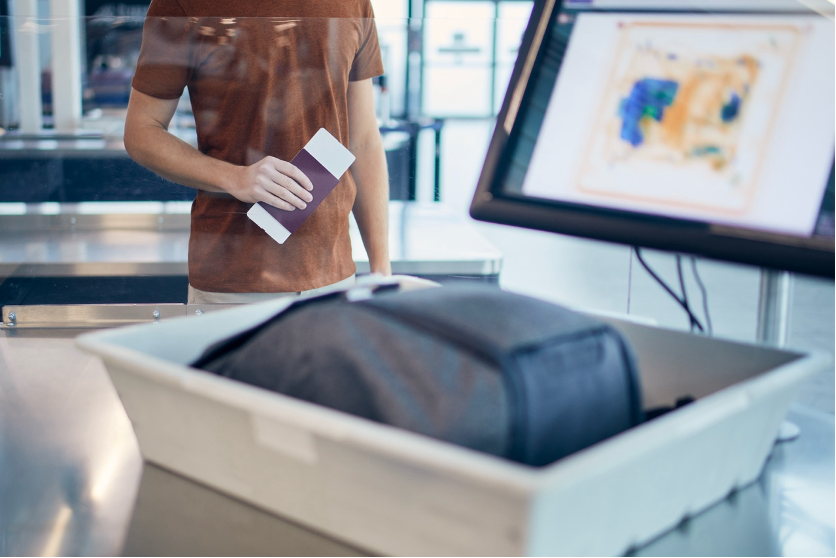
While body scanners screen passengers, luggage undergoes a different type of inspection.
Carry-on bags pass through X-ray scanning systems, which work differently from body scanners. Instead of detecting reflected radio waves, X-ray scanners analyze how different materials absorb radiation.
Dense materials, such as metal, absorb more radiation and appear darker on the screen. Less dense materials appear lighter.
This allows trained security operators to identify items inside luggage and determine whether further inspection is necessary.
If something looks unusual or unclear on the screen, a security officer may ask to open the bag.
Find out more about Airport Security.
Why Travel Sentry Approved Locks Matter
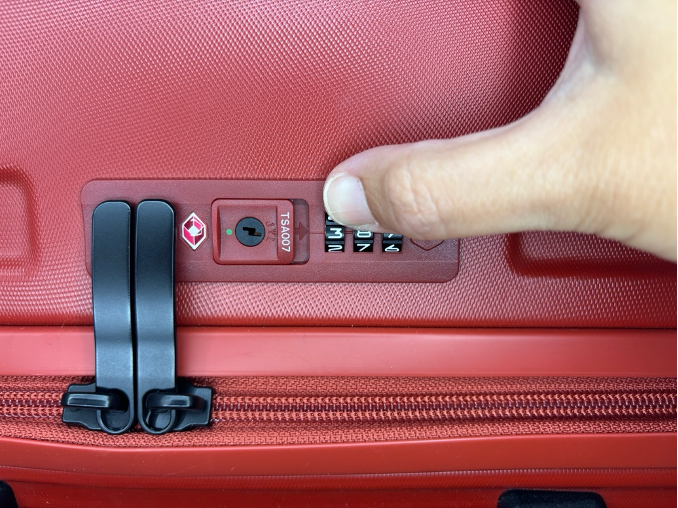
Occasionally, airport security authorities may need to inspect checked luggage. When a bag is locked with a traditional lock, officers may have no choice but to cut the lock to access the contents.
Travel Sentry-approved locks were developed to solve this problem.
These locks allow security agencies to open luggage using a secure master key, perform the inspection, and then relock the bag before it continues its journey.
This protects both:
- The luggage itself
- The traveler’s belongings
Today, Travel Sentry locks are recognized by 750 airports, helping ensure luggage screening can occur efficiently without unnecessary damage.
For travelers, it provides peace of mind that their suitcase can be inspected without compromising the lock or security of their belongings.
Most passengers today move through security checkpoints in under a minute.
Combined with X-ray systems for luggage and technologies like Travel Sentry-approved locks, modern airport screening helps maintain the balance between security, efficiency and traveler privacy.
And for most passengers, the process is over almost as quickly as it begins.
Contact Travel Sentry Today
Airport security can sometimes feel confusing, especially with new technology like body scanners and advanced screening systems. Understanding how the process works can make travelling much smoother and less stressful.
At Travel Sentry, we’re committed to helping travellers move through airports with greater confidence. Our globally recognised TSA locks allow security agencies to inspect luggage safely when required, without damaging your lock or suitcase.
If you have questions about airport security, Travel Sentry Approved locks, or how our solutions support safer travel around the world, we’d be happy to help.
Contact us today.
Related Articles
March 2026
