 Back to all articles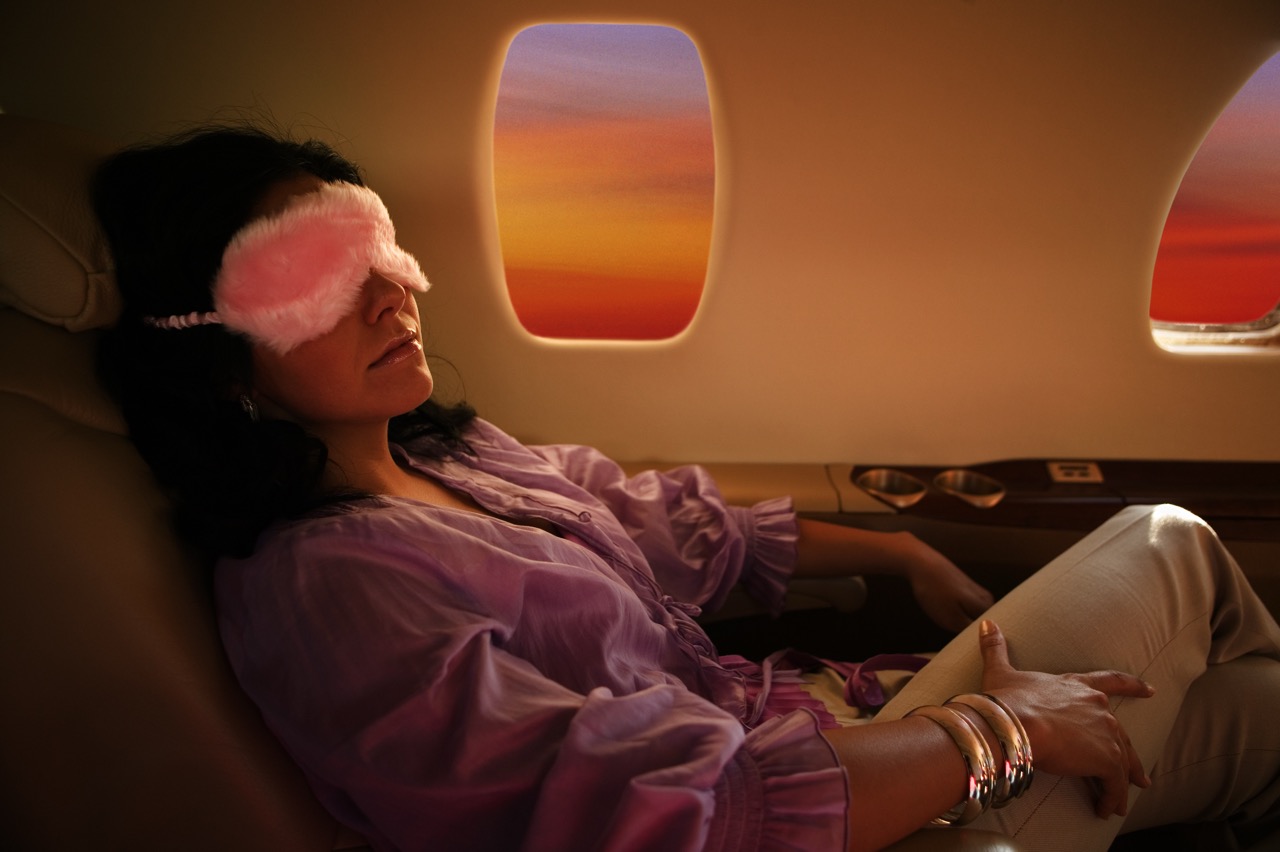



In-Flight Theft on Overnight Flights: How to Keep Your Carry-On Safe
I think most travellers know the exact moment where they heave a sigh of relief, having navigated planning a trip, the stress of packing, getting to the airport and through security and securing overhead space for their carry-on. The airplane door closes, the seatbelt goes on. Time to relax. Well, not quite.
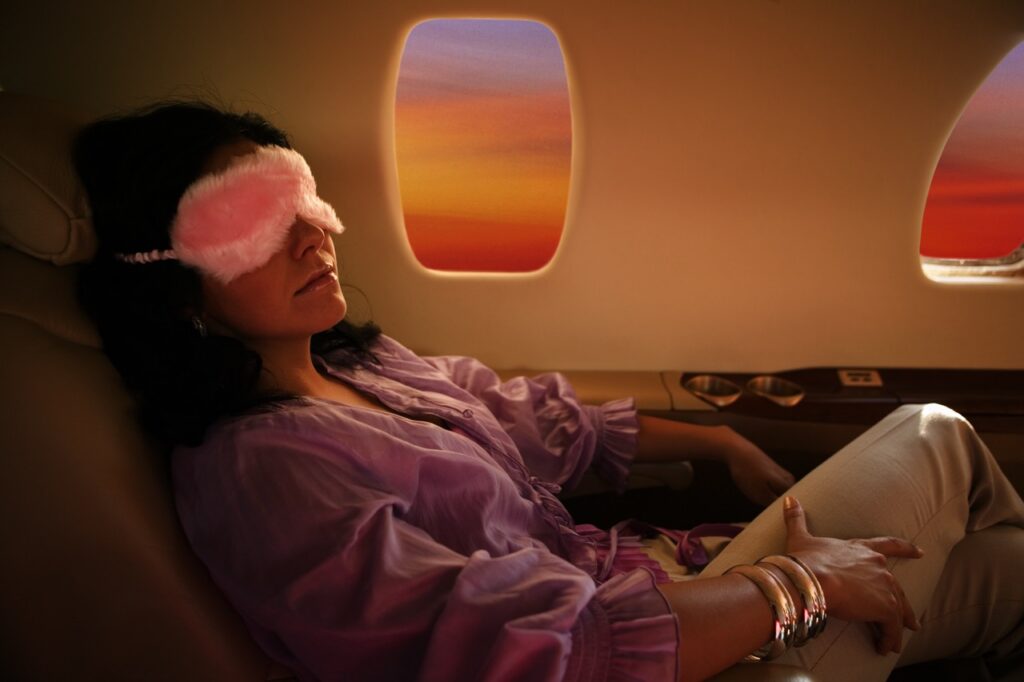
Because while most of us see an overnight flight as a chance to watch a film, close our eyes and wake up somewhere new, thieves smell opportunity: a dimly lit cabin, rows of sleeping passengers and overhead lockers full of credit cards and cash, watches, laptops, jewellery, passports and high spec cameras.
In-flight theft is not new, but recent reports suggest it is becoming more organized, more targeted and more visible on certain routes, especially overnight and late-night flights into major international hubs.
What Is In-Flight Theft?
In-flight theft is exactly what it sounds like: theft that takes place during a flight, usually from carry-on luggage stored in the overhead compartment. Consider that overhead compartment space is often at a premium, particularly in the main part of the cabin – your carry-on might even not be right above your head, but rows away, perhaps even behind you.
In the twilight of a sleeping cabin, a passenger opens an overhead compartment, removes a bag, quietly extracts valuables and puts the bag back before the owner notices. If challenged, the explanation can be simple: “Sorry, I thought it was mine.”
By the time the theft is discovered, the aircraft may have landed, passengers may have dispersed and the suspect may already be on the way to a connecting flight.
That is why prevention matters. Once something has gone missing at 35,000 feet, recovering it can be very difficult.
Why Are Overnight Flights More Vulnerable to Theft?
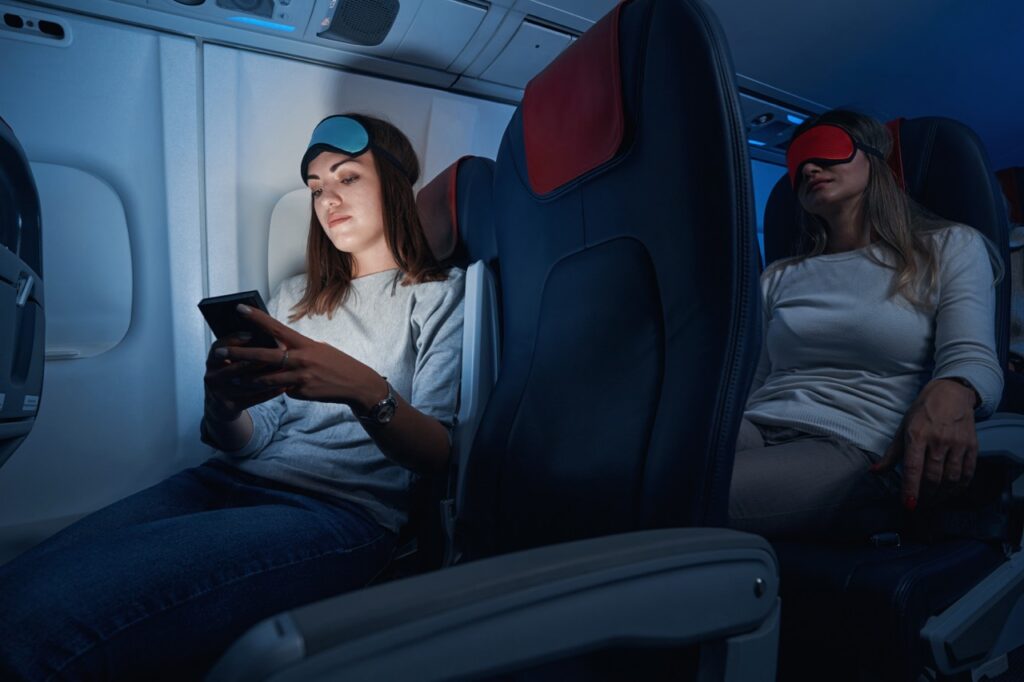
Overnight flights create the perfect conditions for in-flight theft. At the airport, most travelers are highly alert. We keep one hand on our bag, check our pockets, watch our passport and make sure our wallet is exactly where it should be. But once we are on board, our behavior changes.
The bag goes overhead. The lights dim. Meal trays are cleared. Headphones go on and people fall asleep.
In such a liminal environment, someone opening an overhead locker does not look suspicious. Passengers get up throughout the flight to stretch, use the bathroom, retrieve something from the overhead locker. Movement is normal, which makes unusual movement harder to spot.
This is especially true if your bag is stored behind you, across the aisle, or several rows away. Once your carry-on is out of your direct line of sight, it is much easier for someone else to access it unnoticed.
Which Flight Routes Are Seeing More In-Flight Theft Reports?
Recent reports have highlighted a rise in thefts on certain regional and international routes, particularly flights arriving at major hubs in Asia.
Hong Kong authorities reported 169 theft cases on Hong Kong-bound flights between January and October 2024, compared with 92 cases in all of 2023. Around 70% of those 2024 cases involved short-haul flights arriving from Southeast Asia, with Malaysia, Thailand, India and Vietnam named among the main departure points. Around 20% involved flights from the Middle East, including Dubai, Turkey and Doha. Stolen items included cash, jewellery, watches and credit cards, with the total value reported at around HK$4.32 million.
Singapore has also seen notable cases. In one reported incident, three passengers on a Scoot flight from Vietnam to Singapore were victims of an alleged theft involving about S$31,000.
The takeaway is not that these routes should be avoided. It is that travellers should be more aware on overnight flights, regional business routes and flights where passengers may be carrying cash, luxury goods or important documents.
Why the Overhead Locker Is Not a Safe Place for Valuables
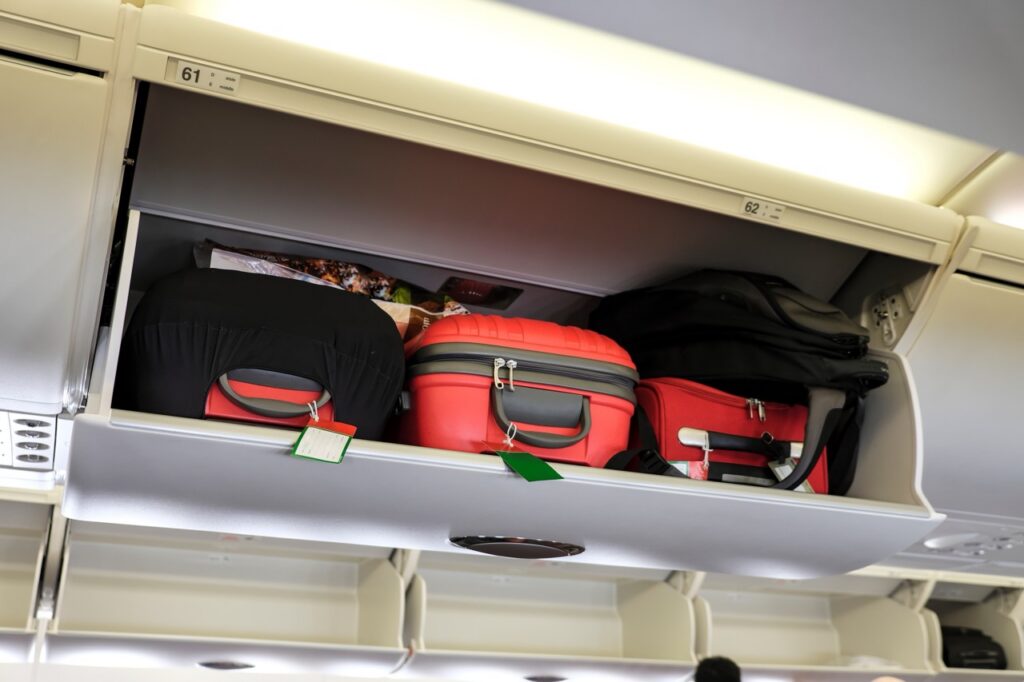
Many travelers treat the overhead locker as personal storage. It is not. It is very much shared cabin space.
Your carry-on may be above your seat, but that does not mean it is secure. It may be moved by crew, shifted by another passenger or placed somewhere out of sight during boarding. Even if it stays exactly where you put it, anyone nearby can open the locker.
This is where the risk becomes practical. If your passport, cash, credit cards, jewellery, medication or house keys are in a bag above you while you sleep, they are not really with you. They are nearby, but they are not under your control.
The safest rule is simple: valuables should stay on your person or in a small personal item under the seat in front of you.
How Can Travellers Prevent In-Flight Theft?
The best way to prevent in-flight theft is to make your belongings harder to access, harder to identify as valuable and easier for you to monitor.
- Start before boarding. Put your passport, wallet, phone, cards, medication, keys, jewelry and essential documents into a small bag that stays with you at your seat. Do not place these items in an overhead cabin case, even if the flight is short.
- If you are carrying cash, split it across secure locations rather than keeping it all in one wallet or envelope. Don’t flash large amounts of cash at your seat and do not place valuables in the seat pocket in front of you.
- Avoid the temptation to stow passports and phones in seat pocket – this should just be for water bottles and snacks, if you’re properly safety conscious.
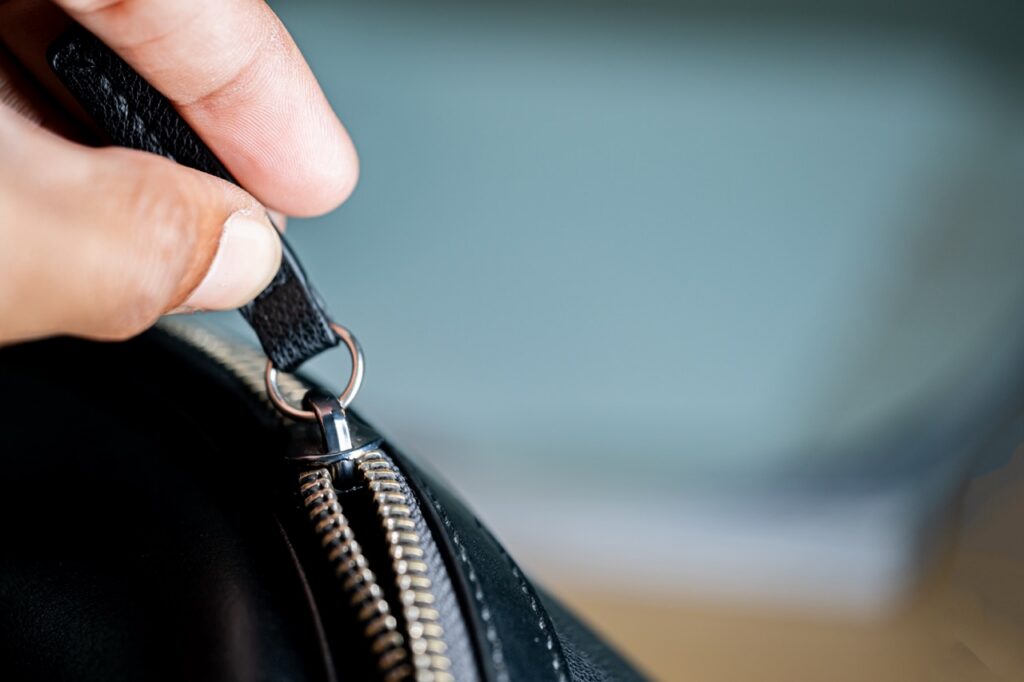
- When storing your cabin bag overhead, try to place it across the aisle and slightly in front of you, where you can see it. Avoid placing it behind you if possible. Turn the zips inward or downward to make casual access less convenient.
And before the cabin lights dim, lock your bag.
Do Travel Sentry Locks Help Prevent In-Flight Theft?
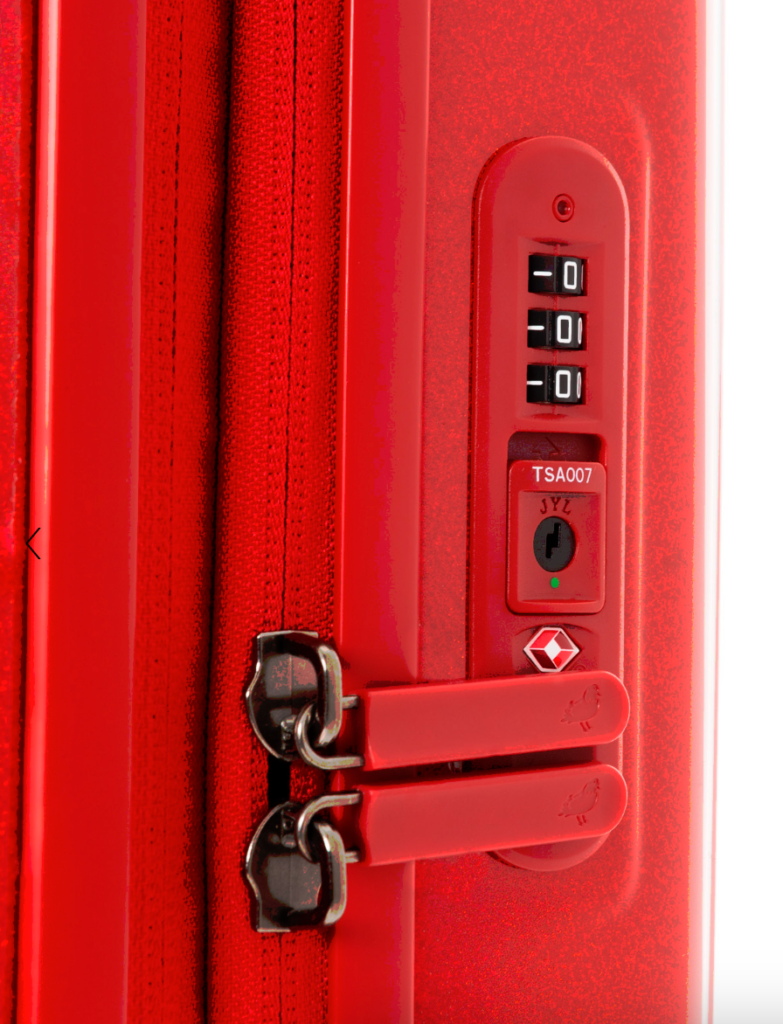
Yes, Travel Sentry locks can help deter in-flight theft by making your bag less convenient to open quickly and quietly. Opportunistic thieves will find easier pickings in unlocked bags.
A lock will not make a bag impossible to access, but most in-flight theft depends on speed, subtlety and opportunity. A thief wants the easiest target: an unlocked zip, an open pocket, a bag that can be rummaged through in seconds.
A locked zip changes that by adding some friction and making the act of opening the bag more obvious. In a cabin full of sleeping passengers, that extra layer counts.
Travel Sentry-approved locks are particularly useful because they are designed for air travel. They can be opened and relocked by authorized airport security officers using approved tools, which reduces the risk of the lock being cut off during inspection. They are easy to identify by the Travel Sentry red diamond logo.
For carry-on luggage, this matters in two ways. First, your bag remains accessible to authorized security when required, allowing damage free inspection. Second, once you are on board, the same lock helps deter opportunistic access in the overhead locker.
For a hard-shell cabin case, use the integrated Travel Sentry lock and check it is properly engaged before you sleep. For backpacks or soft bags, use a small Travel Sentry cable lock through the zip pulls. If your bag has multiple compartments, lock the ones that contain chargers, headphones, documents, sunglasses, spare cards, watches, electronics or duty-free.
It is a small habit, but a useful one. On a busy overnight flight, you are not trying to turn your cabin bag into a vault. You are trying to make it a less attractive target than the unlocked bag next to it.
See our article about Why You Should Always Consider Locking Your Carry-On.
What Should You Keep With You During an Overnight Flight?
On an overnight flight, keep the following items close to you, ideally in a zipped personal item under the seat in front:
Passport, wallet, credit cards, phone, cash, jewelery, medication, keys, travel documents, glasses, essential work devices and anything you could not easily replace on arrival.
For extra peace of mind, a cross-body pouch, zipped inner pocket or small under-seat bag that remains physically close to you while you sleep is a great addition. Some travelers loop the strap around a foot or armrest so they would feel movement if the bag were disturbed.
This may sound cautious, but it is much easier than trying to cancel cards, replace a passport or report missing cash after landing.
What Should You Do If Something Is Stolen on a Plane?
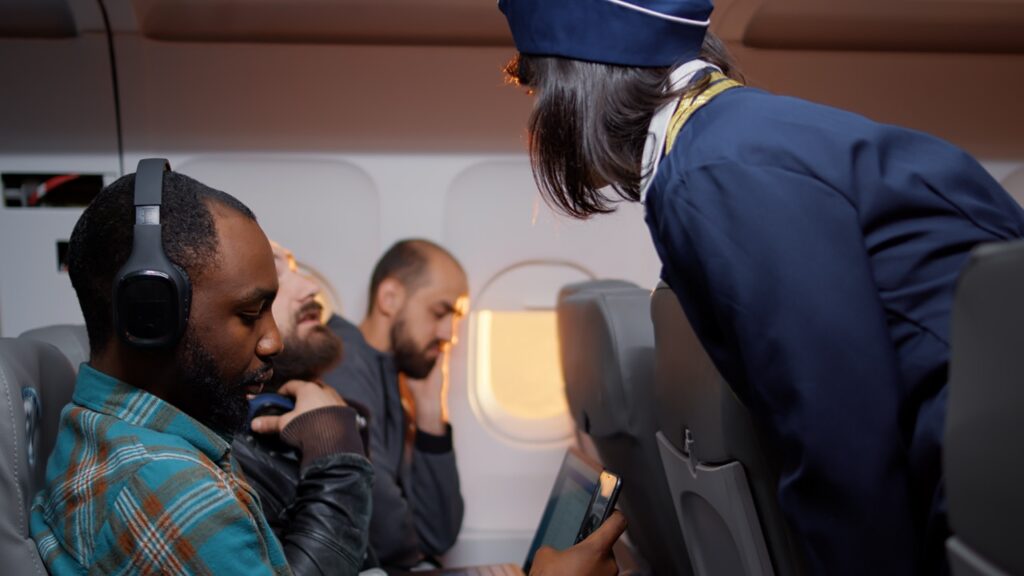
If you notice something is missing during the flight, tell cabin crew immediately. Give them clear details: what is missing, where your bag was stored, when you last saw the item and whether you noticed anyone near your luggage.
Do not wait until you are off the aircraft if you can avoid it. Reporting the theft while passengers are still on board gives crew and authorities a better chance of responding.
If cards are missing, freeze them through your banking app as soon as possible. If your passport has been stolen, report it to airport police or border authorities immediately on arrival. If you only discover the theft after leaving the aircraft, report it to airport police before leaving the terminal.
The sooner you act, the better your chances of limiting the damage.
The Simple Rule for Sleeping Safely at 35,000 Feet
The rise in in-flight theft does not mean travellers need to be anxious every time they board a plane. It simply means we need to update an old assumption.
The aircraft cabin may feel like a safe bubble once the doors close, but it is still a public space. Overnight flights are convenient, but they also create long stretches where passengers are less alert. The overhead locker is useful, but it is not secure storage.
By all means, relax, watch the film, have a glass of wine before you sleep. Just do it with your passport, cards and cash close to you, your cabin bag locked, and a Travel Sentry red diamond lock adding one more layer between your belongings and an opportunist.
FAQs about in-flight theft
Is in-flight theft common on overnight flights?
In-flight theft is still relatively rare, but news reports suggest it is becoming more of a threat on certain overnight and late-night routes, especially where passengers may be carrying cash, jewellery, watches, credit cards or important documents. Overnight flights can be more vulnerable because cabin lights are dimmed, passengers are sleeping, and bags in overhead lockers are less closely watched.
When does most in-flight theft occur?
According to news sources, on overnight flights, 3am – 4am is prime time for theft from overhead compartments. Pickpocketing can also occur as people disembark, with crowded spaces providing cover for skilled thieves to lift belongings.
Where should I keep my valuables on an overnight flight?
The best place is concealed somewhere on your person; Travel Sentry’s RFID money belt is a practical solution which can be concealed under clothing. If that is not possible, the next best place is in a zipped personal item under the seat in front of you – ideally with a sturdy padlock or cable lock: Travel Sentry locks are usually available to buy in the airport before you fly. Third best for bulkier items is in a locked piece of carry-on in the overhead locker in your row, but across the aisle for best line of sight. Finally, don’t forget that if your pass-through external pocket on your carry-on doesn’t lock – that’s not a good place to store valuables or documents!
Related Articles
September 2026
What Do You Have to Remove at Airport Security?
What comes off, what comes out of your bag and what you can skip if you've got PreCheck.
Read More
August 2026
How to Pack a Suitcase for a Two-Week Trip
Practical tips from a versatile wardrobe to current airport liquid rules for toiletries.
Read More
August 2026
How to Fly More Responsibly
Flying always has a footprint, but here are some tips that can meaningfully shrink yours.
Read More


